


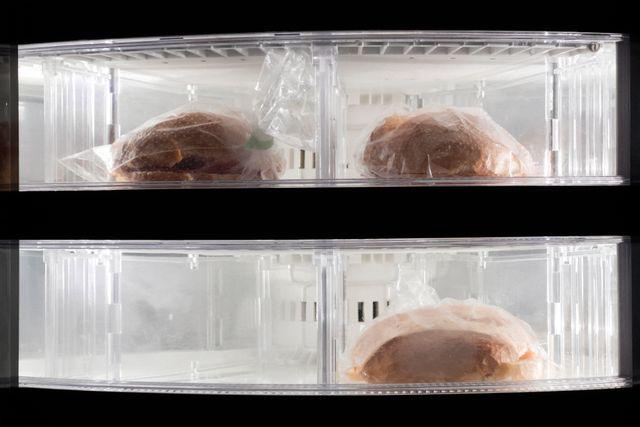
You reach for the milk, and it’s slushy. The lettuce in the back is limp and translucent, and the eggs have tiny cracks in their shells. A fridge that freezes food is just as frustrating as one that won’t cool, and it wastes a lot of groceries before most people figure out what’s going on.
The good news is that a few of the most common causes take less than five minutes to fix. The others point to a specific part that has started to fail. Here’s how to work through it.
First, Check What’s Actually Freezing
Where the frozen food sits tells you a lot. If only the items on the top shelf at the back are freezing, the problem is usually airflow from the freezer vent. If food is freezing all over the fresh food section, a setting or a temperature-control part is the more likely culprit. If it only happens in winter and the fridge lives in your garage, skip straight to the garage section below, because that’s a different problem altogether.
Put an appliance thermometer in a glass of water on the middle shelf and leave it overnight. That gives you a real reading instead of a guess. The fridge should sit between 35°F and 38°F (about 2°C to 3°C), and the freezer at 0°F (-18°C).
The Temperature Is Set Too Low
It sounds obvious, but it’s the first thing to rule out. Dials get bumped when someone grabs a jug from the door, kids press buttons on the touch panel, and some people turn the fridge colder during a heat wave and forget to change it back.
The fix: Set the fridge to 37°F (3°C) and give it a full 24 hours to settle before you judge the result. On older dial-style models with numbers instead of degrees, a higher number usually means colder, which catches a lot of people out. Check your manual if you’re not sure which way to turn it.
A Quick-Freeze Mode Was Left On
Many fridges have a boost setting that runs the compressor hard to freeze a large grocery haul fast. LG calls it Express Freeze on newer models and Ice Plus on older ones, and other brands have their own versions. On most models, it switches off on its own after a set time, but if it was activated repeatedly, or the control is acting up, it can keep pushing extra-cold air into the fresh food compartment.
The fix: Check the display for an active quick-freeze or ice-boost icon and turn it off. If the icon won’t stay off, or keeps turning itself back on, that points to a control issue rather than a settings issue.
Food Is Blocking the Air Vents
Most modern fridges don’t have their own cooling system. The freezer makes cold air and pushes it into the fridge through a vent, usually at the top back of the fresh food section. Anything sitting right in front of that vent gets blasted with freezer-cold air. That’s why the tomatoes and the leftover rice at the back of the top shelf freeze while the rest of the fridge stays normal.
An overpacked fridge makes it worse. When air can’t circulate, the fridge runs longer to cool warmer areas, and the spots closest to the vent get colder and colder.
The fix: Leave a few inches of space in front of the vents and avoid cramming the shelves wall to wall. Keep delicate produce, eggs, and drinks away from the back of the top shelf. Most people notice the difference within a day.
A Faulty Air Damper
The damper is a small flap, either mechanical or motorized, that controls how much cold air flows from the freezer into the fridge. When it’s working, it opens and closes based on the temperature inside. If it gets stuck open, which can happen when the motor fails or ice jams the flap, freezer air pours into the fridge nonstop, and food starts freezing throughout.
You might notice frost around the vent opening or hear the damper clicking repeatedly without settling.
The fix: A stuck damper usually needs replacing. On some models, it’s tucked behind a panel that requires removing shelves, the control housing, and wiring connectors, so it’s a job most homeowners leave to a technician.
A Failing Thermistor or Temperature Sensor
The thermistor is a small sensor that tells the control board how cold the fridge is. As it fails, it can send the wrong reading, telling the board the fridge is warmer than it really is. The board responds by sending more cold air, and the fridge keeps cooling well past the setpoint.
Temperatures that drift from day to day, or a fridge that keeps getting colder even after you’ve adjusted the setting, are typical signs.
The fix: A technician can test the thermistor’s resistance with a multimeter and compare it to the manufacturer’s spec chart. Sensors are relatively inexpensive parts, but finding the right one and confirming it’s the actual fault is what saves you from swapping parts at random.
A Main Control Board Problem
Less often, the issue sits with the main control board itself. If the board isn’t reading sensor data correctly or a relay is stuck, the compressor and fans may keep running when they should cycle off. This tends to come with other symptoms, like error codes, a display acting strangely, or the fridge running loud and nonstop.
The fix: Boards are among the pricier fridge components, so it’s worth ruling out the damper and sensors first. For LG owners, a technician experienced with LG fridge repair in Calgary can read the model’s diagnostic codes and pinpoint whether it’s the board or a component the board controls.
The Calgary Garage Fridge Problem
Plenty of Calgary homes have a second fridge in the garage for drinks and overflow groceries. In winter, those fridges often start freezing everything inside, and it surprises people every year.
Here’s why. A standard fridge only has one thermostat, and it sits in the fresh food section. When the garage drops to -15°C or colder, the fridge section is already cold from the surrounding air, so the thermostat barely asks the compressor to run. The garage itself then freezes the fridge’s contents. Meanwhile, the freezer warms up because the compressor isn’t running enough to keep it at 0°F. Then a chinook rolls through, the garage jumps 20 degrees in a day, and the cycle swings the other way.
The fix: Check your manual for the fridge’s minimum operating temperature. Many standard models aren’t designed for unheated spaces. If you want a fridge in the garage year-round, look for one rated for garage use, or keep the garage heated above freezing. Moving drinks into insulated bins can buy you some time on the coldest nights.
When to Call a Technician
Start with the easy checks: the temperature setting, any quick-freeze mode, and the space around the vents. If food is still freezing after you’ve corrected those and given the fridge 24 hours, the cause is probably a damper, sensor or control board. Frost around the vent, temperatures that won’t hold steady, error codes, or a fridge that runs constantly are all good reasons to book a diagnosis before more groceries end up in the bin.
Get Your Fridge Back to the Right Temperature
Frozen produce and slushy milk add up fast, and the longer a faulty damper or sensor goes unchecked, the harder the compressor works to keep up. We’d rather catch it early. When you call us, a Red Seal journeyman comes to your home with a fully stocked van, tests the parts that actually control temperature, and walks you through what’s wrong in plain terms before quoting the repair.
Looking for LG fridge repair in Calgary that doesn’t leave you waiting all week? We’ve spent over 15 years working on refrigerators in Calgary homes, from counter-depth LG French door models to built-in Sub-Zero units, so we can do most fixes in a single visit. Our parts are covered for 90 days and labor for 30, and you’ll know the full price before we pick up a tool.
Book with us at 587-575-2023. Same-day and next-day slots are available, and calls made before 5 p.m. get $25 off.


