


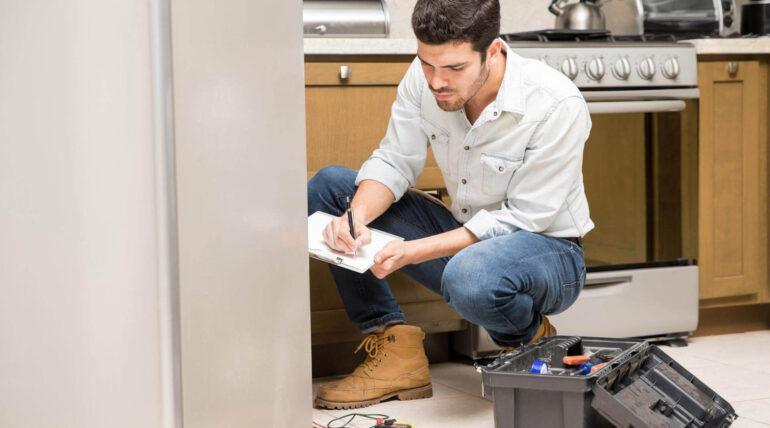
Finding a puddle of water underneath your refrigerator is one of those household problems that is easy to ignore at first. You wipe it up, check again later, and hope the leak has stopped. Unfortunately, recurring water under a fridge usually means something needs attention. The cause could be a clogged drain, damaged tubing, a problem with the drain pan, or another component involved in the refrigerator’s cooling or water-dispensing system.
The good news is that a leaking refrigerator does not automatically mean you need a new appliance. Identifying where the water is coming from and when the leak occurs can provide useful clues about the underlying problem.
1. A Clogged Defrost Drain
One of the most common causes of water leaking from a refrigerator is a blocked defrost drain. During normal operation, frost that develops around the evaporator coils is periodically melted during the automatic defrost cycle. The resulting water should flow through a drain and eventually collect in a drain pan underneath the appliance, where it evaporates.
If the drain becomes blocked by ice, food particles, or other debris, the water cannot escape properly. It can back up inside the refrigerator or freezer compartment and eventually find its way onto the floor.
A clogged defrost drain may be particularly likely if you notice:
- Water collecting beneath crisper drawers
- Ice or frost around the freezer floor
- Water appearing periodically rather than continuously
- A puddle that returns after you have already cleaned it
A recurring blockage may indicate that the drain needs a more thorough inspection rather than simply being cleared once.
2. A Cracked or Overflowing Drain Pan
Your refrigerator has a drain pan designed to collect water produced during the defrost process. Normally, this water evaporates without creating a visible leak. If the pan becomes cracked, displaced, or unable to hold the water being produced, it can spill onto the floor.
Because the drain pan is located underneath or near the bottom of the refrigerator, this type of problem can be difficult to identify without moving the appliance or inspecting the relevant components.
If water consistently appears underneath the front or lower portion of the fridge without obvious water coming from the supply line, the drain pan is one component worth investigating.
3. A Leaking Water Supply Line
Refrigerators with ice makers and water dispensers have water lines that connect the appliance to the home’s water supply.
A loose connection, cracked tubing, or damaged fitting can allow water to escape behind the refrigerator. Depending on the leak location, you may notice water collecting under the appliance or on the floor behind it.
Check for signs such as:
- Water appearing soon after using the dispenser
- A wet area behind the refrigerator
- Dripping from a connection
- A puddle that continues to grow even when the refrigerator is not actively dispensing water
Do not pull a refrigerator aggressively away from the wall. These appliances can be heavy, and moving them carelessly can damage flooring, walls, electrical connections, or water lines.
4. A Faulty Water Filter or Filter Housing
A refrigerator water filter is another possible source of a leak. If the filter is not seated correctly, is damaged, or the filter housing has developed a problem, water can escape from the filtration system.
This can happen after replacing a filter, particularly if the replacement was not installed correctly. If the leak started shortly after changing the filter, inspect the filter area first. The exact filter design varies by refrigerator model, so follow the manufacturer’s instructions rather than forcing the component into place.
5. A Damaged Water Inlet Valve
The water inlet valve controls the flow of water into components such as the ice maker and dispenser. If the valve develops a crack, fails to close correctly, or has a damaged connection, it can cause water to leak into or around the refrigerator.
Unlike a simple loose connection, a faulty valve generally requires component testing and replacement. If you can see water coming from the valve area, avoid repeatedly operating the dispenser or ice maker until the issue has been properly assessed.
6. A Door Gasket Can Contribute to Moisture
A damaged refrigerator door gasket can also create water-related problems, although the water may not initially appear to come from the same place as a plumbing leak.
The gasket creates a seal around the door. If it is torn, loose, dirty, or no longer sealing correctly, warm air can enter the refrigerator. That increases condensation and can contribute to excess moisture and frost formation.
Look for:
- Gaps around the door seal
- Cracks or tears
- Condensation around the door
- Excessive frost
- A door that does not close properly
A refrigerator with a poor door seal may also have to work harder to maintain its temperature.
7. The Refrigerator May Not Be Level
The position of the refrigerator can affect how water drains. If the appliance is significantly out of level, water may not move through the intended drainage path correctly. It can also affect door alignment and sealing.
Check whether the refrigerator rocks or whether the doors appear uneven. Many refrigerators have adjustable leveling feet that allow their position to be corrected. However, avoid making major adjustments without checking the manufacturer’s instructions. A refrigerator should be positioned according to its specific installation requirements.
Where Is the Water Coming From?
Before attempting to fix a leak, identify its location.
Water inside the refrigerator:
This can point toward a blocked or frozen defrost drain.
Water underneath the refrigerator:
A drain pan, defrost system, or water line could be involved.
Water behind the refrigerator:
Inspect the external water supply line and connections.
Water appearing after using the dispenser:
The filter, filter housing, tubing, or inlet valve may require inspection.
Water appearing after the ice maker operates:
The ice maker’s water supply components may be involved.
The location does not provide a definitive diagnosis, but it can help narrow down where to investigate.
What Should You Do When You Find a Leak?
Start by protecting the floor. Mop up standing water promptly, particularly if the refrigerator sits on hardwood, laminate, or another material that can be damaged by prolonged moisture. Then determine whether the leak is continuing.
If your refrigerator is connected to a water supply and you suspect a plumbing-related leak, shutting off the water supply can prevent additional water damage while you arrange an inspection.
You should also avoid removing electrical or sealed-system components yourself. Refrigerators contain electrical components and, depending on the repair, specialized systems that require appropriate tools and knowledge.
When Should You Call a Refrigerator Technician?
A small puddle may seem harmless, but recurring leaks should not be ignored.
Professional diagnosis is particularly appropriate when:
- The leak keeps returning
- You cannot identify its source
- Water is coming from behind internal panels
- The refrigerator is also struggling to cool
- You notice excessive ice or frost
- The water line appears damaged
- The leak is substantial
- The refrigerator makes unusual sounds
- A component such as a valve, drain, or control system may have failed
A technician can determine whether the problem involves drainage, water delivery, mechanical components, or another part of the refrigerator.
We Diagnose and Repair LG Refrigerator Leaks in Calgary
If your refrigerator continues leaking or the source is difficult to identify, our services of LG fridge repair in Calgary can help determine whether the issue involves a clogged drain, water line, filter housing, inlet valve, or another component. Addressing the leak promptly can help protect your flooring, prevent further appliance damage, and restore reliable refrigerator operation.
Our technicians have brand-specific experience with LG refrigerators, including models with ice makers, water dispensers, French-door configurations, InstaView features, and other modern systems. We provide an upfront quote before repair work begins, stock commonly needed parts in our service vehicles, and offer a 90-day warranty on parts and labor.


